
How to Evaluate Any Stock Using a Complete Investment Framework
Get our weekly updated Global Stock Tracker, which we use to assess the attractiveness of the Top 500 stocks in the world, along with additional valuation reports.
Valuation feels like the smartest place to start investing. You open a model, run the numbers, and feel in control. But numbers can give confidence too early. And when confidence comes before understanding, even good decisions can turn into bad ones.
I have seen brilliant analysts build beautiful models and still make poor investment decisions. The problem is not a lack of effort or skill. The problem is the order in which they think. When valuation comes first, every step after that is used to support the number they already believe in. This is how confidence grows on weak foundations.
Investing is more than valuation. Valuation only makes sense when it is compared with other things. Without a clear framework to guide your thinking, even the best model can slowly push you toward the wrong conclusion without you realizing it.
Episode 2 of the Valuation Master Class Show explains why valuation alone is not enough, and how starting with the wrong step can quietly lead analysts to confident but fragile investment decisions.
Andrew Stotz breaks this down using real market data and clear examples, showing why fundamentals, momentum, and risk must come before valuation.
If you want a disciplined way to evaluate any stock, watch Episode 2.
Why starting with valuation puts you at risk
Every investment decision sits between two forces. Management controls earnings. Investors control the price.
Earnings tell you how the business performs. Price tells you what the market expects.
As analysts, our job is to decide whether those beliefs match reality. That decision cannot come from valuation alone. It requires understanding the quality of the business, the direction in which it is moving, and the risks that could cause permanent damage.
This is why I rely on a structured framework that forces the right order of thinking. I call it FVMR, which stands for Fundamentals, Valuation, Momentum, and Risk. In this approach, valuation is not the starting point. It is the final check, used only after the business has proven it deserves one.
Fundamentals come first because they explain quality
Fundamentals are about the health of the business. They help answer a simple question. Is this company actually good at making money?
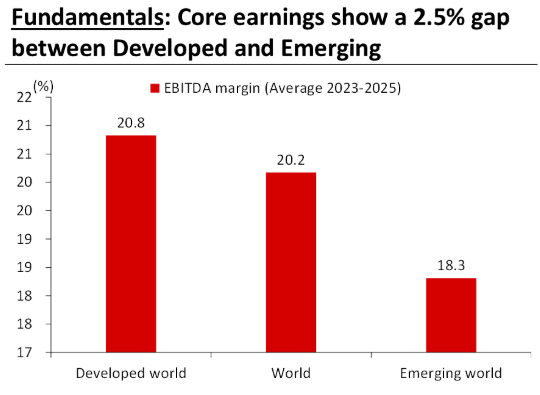
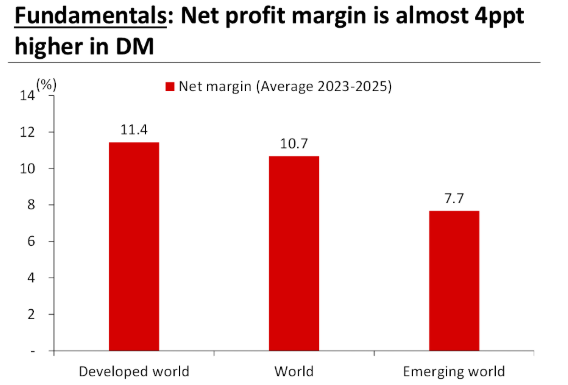
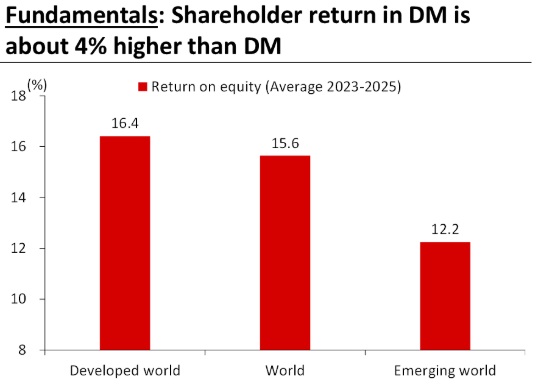
To answer this, we examine factors such as profit margins and return on equity. These numbers show how efficiently a company turns sales into profit and how well it uses shareholders’ money.
When we compare markets around the world, we see a clear pattern. Companies in developed markets tend to have higher profit margins and higher returns than companies in emerging markets. That is one reason investors are willing to pay more for them.
This teaches an important lesson. Many markets and companies stay cheap because they earn weak returns. Buying something just because it looks inexpensive can be dangerous if the business quality is poor.
Strong investing starts with strong businesses.
Valuation only makes sense when viewed relatively
Once you understand the business, valuation becomes useful. This is where you compare the price with fundamentals.
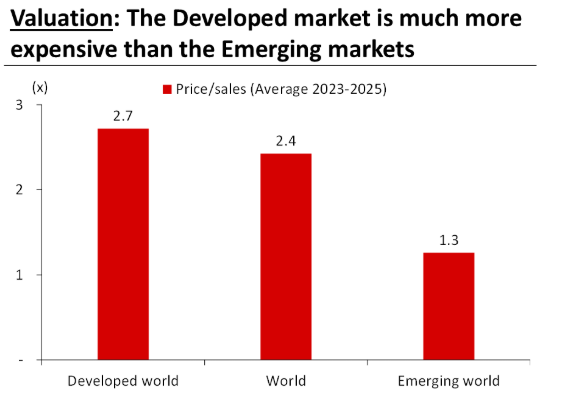
There are many ways to value a stock. Price-to-sales looks at revenue. Price-to-earnings looks at profit. Price-to-book looks at the value of assets. Each measure tells part of the story, but none tells the full story on its own.
Around the world, developed markets trade at higher valuation multiples than emerging markets. This is not random. It reflects higher profitability and more stable earnings.
Even among large global companies, valuations vary widely. Some trade at very low multiples. Others trade at very high prices. A low multiple does not automatically signal opportunity. A high multiple does not automatically signal danger.
Valuation is a conclusion that must be supported by fundamentals and momentum.
Momentum shows whether the story is improving
Momentum is about change. It looks at whether earnings and prices are rising or falling.
This part is often ignored by beginners and even by some experienced analysts. Many people focus only on where a company is today and forget to ask where it is going.
Markets care deeply about change. A company with average results but improving earnings can perform better than a company with strong results that are getting worse.
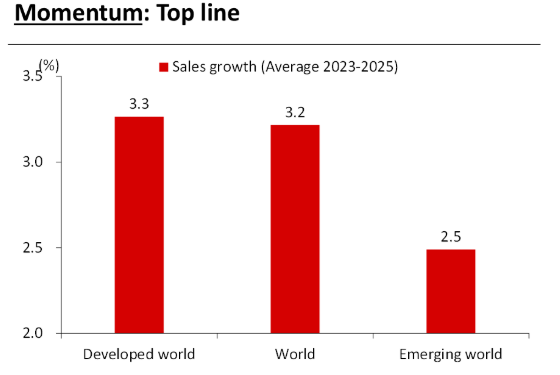
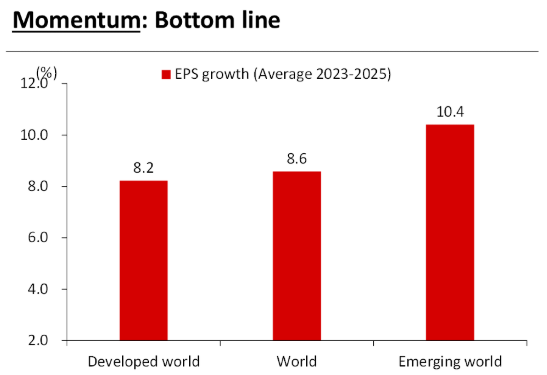
When we look globally, developed markets currently have higher profitability, but earnings growth in emerging markets has been picking up faster in recent years. That change matters because markets move based on direction, not just level.
Ignoring momentum can mean being right too early, which in investing often feels the same as being wrong.
Risk is about permanent loss, not daily ups and downs
Many people think risk means price movement or volatility. That is not true. Risk is the chance of losing money permanently.
A stock that moves up and down a lot is not always risky. A stock that looks calm can still be dangerous if the business is weak or heavily in debt.
Real risk comes from unstable earnings, poor financial structure, and weak business models. These are the things that cause lasting damage.
The deeper purpose of investing is not to avoid short-term discomfort. It is to build long-term security. That only happens when downside risk is taken seriously.
Why the framework works as a system
Each part of the framework matters, but none works alone.
Fundamentals tell you whether the business is strong. Valuation tells you what you are paying. Momentum tells you what is changing. Risk tells you what could go wrong.
When these pieces are used together, analysis becomes clearer and more disciplined. This is why tools that compare many companies across all four areas are so powerful. They force consistency and reduce emotional decision-making.
The goal is not to predict the future perfectly. The goal is to make fewer avoidable mistakes.
Get our weekly updated Global Stock Tracker, which we use to assess the attractiveness of the Top 500 stocks in the world, along with additional valuation reports.
Your next step as an analyst
If you want conviction that survives market cycles, you need a process that forces clarity before confidence. If you want to evaluate stocks with confidence, start by changing the order of your thinking.
Do not begin with valuation. Begin with understanding the business.
Ask whether the company is strong. Ask whether things are improving or getting worse. Ask what could cause permanent damage. Only then ask what the stock is worth.
Valuation is important, but it should be earned, not assumed.
Your Quick Checklist for Valuations
Here are the key steps analysts use to keep valuations grounded in reality:
People, References, and Resources Mentioned in This Episode
People
Key Concepts and Frameworks
A structured approach to stock evaluation that stands for Fundamentals, Valuation, Momentum, and Risk. Used to ensure valuation is the final step, not the starting point.
The idea that management controls earnings through business performance, while investors determine price through market expectations.
Market and Valuation References
Used to explain differences in profitability, valuation multiples, and earnings momentum across global markets.
Profitability Metrics
Price to sales, price to EBITDA, price to earnings, and price to book, used to compare companies and markets on a relative basis.
Sales growth and earnings per share growth, used to understand whether business performance is improving or weakening.
Financial stability, earnings durability, and price behavior, used to assess the potential for permanent capital loss.
Tools and Resources
A weekly updated tool that ranks the world’s largest companies across fundamentals, valuation, momentum, and risk. Available by emailing Andrew Stotz with the subject “GST”.
A reference guide developed by Andrew Stotz to help analysts understand valuation in a global and relative context. Available by email request.
The platform where the Valuation Master Class Show and related research tools are developed and shared.
Source of market-cap weighted sector and regional data used in valuation and profitability comparisons.
Countries and Regions Referenced