
Understanding and Utilizing EBITDA in Business Valuation
Want to Avoid the Most Common Valuation Mistakes?
Download ' 9 Valuation Mistakes & How to Avoid Them' book and learn how professional analysts think about EBITDA, multiples, and real-world valuation decisions.
EBITDA, which stands for Earnings Before Interest, Taxes, Depreciation, and Amortization, is a widely used metric in financial analysis, particularly in business valuation. It provides insight into a company's operational performance before the effects of financing, accounting, and taxation policies.
1. How to Calculate EBITDA
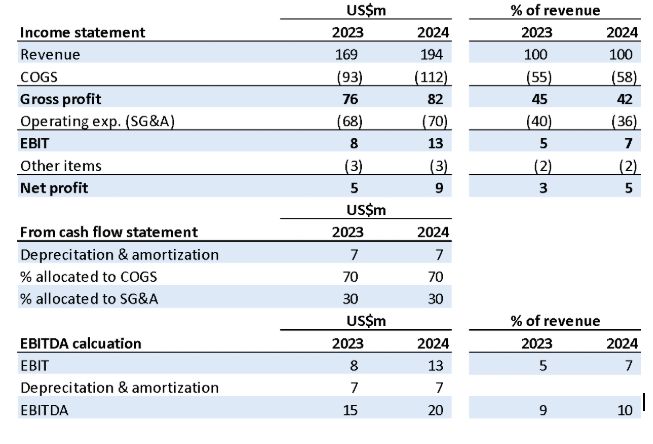
EBITDA is calculated by starting with a company's Operating Profit, also known as EBIT (Earnings Before Interest and Taxes), and then adding back Depreciation and Amortization.
Step 1. Determine Operating Profit (EBIT)
Operating Profit (EBIT) is the profit a company makes from its core business operations after deducting operating expenses such as Cost of Goods Sold (COGS) and Selling, General, and Administrative expenses (SG&A).
Step 2. Add Back Depreciation and Amortization (D&A)
Depreciation and Amortization are non-cash expenses reported on the income statement. Since EBITDA aims to measure operational cash generation, these non-cash charges are added back to EBIT.
EBITDA = EBIT + Depreciation + Amortization
Key Insight. Depreciation and amortization expenses may be allocated across multiple income statement lines such as COGS or SG&A. The total depreciation and amortization amount is added back to EBIT to arrive at EBITDA.
Why Not Just Use EBIT?
EBIT is a clear profitability measure for management. However, EBITDA is commonly used because it approximates cash that may be available to the business’s key stakeholders.
EBITDA represents cash available to:
This makes EBITDA useful for evaluating operating performance before financing and tax effects.
2. How is EBITDA Used in Valuation?
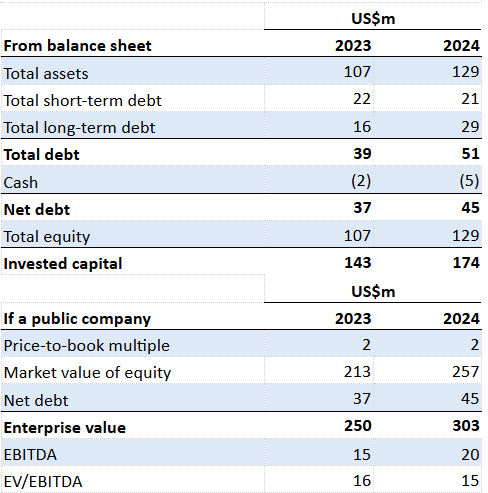
EBITDA is most commonly used in valuation as the denominator in the Enterprise Value to EBITDA (EV/EBITDA) multiple.
The EV/EBITDA Multiple
EV/EBITDA = Enterprise Value ÷ EBITDA
Enterprise Value represents the total value of the business available to both equity and debt holders.
Enterprise Value (EV) = Market Value of Equity + Net Debt
Net Debt = Total Debt − Cash
Analysts use EV/EBITDA multiples to compare companies across countries, sectors, and capital structures.
Utilizing Comparables for Valuation
Valuation analysts compare a company’s EV/EBITDA multiple with similar companies to estimate fair value.
Key considerations include:
For example. Technology companies may trade at higher EV/EBITDA multiples due to growth expectations, while energy companies often trade at lower multiples.
Multiples should always be compared with a company’s historical averages to assess whether it is currently undervalued or overvalued.
Estimated Enterprise Value can be calculated as. Comparable EV/EBITDA Multiple × Target Company EBITDA
Build Your Valuation Expertise
Understanding and applying EBITDA and EV/EBITDA multiples is fundamental to business valuation. To deepen your valuation skills, consider joining the Valuation Master Class Boot Camp.
VALUATION MASTER CLASS BOOT CAMP STARTS FEB. 16, 2026