
Why Interest Rates Can Wipe Millions Off Your Valuation
If you've ever built a valuation that looked airtight on your spreadsheet but didn’t match the market, you're not alone. Every analyst has felt that moment — staring at a discounted cash flow model, wondering what you missed.
Most of the time, the answer is simple: interest rates.
One shift in the macro environment, one central bank announcement, one move in the risk-free rate, and your entire valuation can swing by millions.
This isn’t a minor technical detail.
This is the lever that quietly controls your model.
Ignore it, and you're not valuing companies — you're mispricing them.
Episode 1 of the Valuation Master Class Show breaks down exactly why interest rates dominate your valuation process, and how to stop getting caught off-guard.
Andrew Stotz breaks this down with real data, not theory.
If you want valuations that reflect the actual market, watch Episode 1.
How Interest Rates Rewrite Your Valuation Models
“Ever had a model blow up over one number? This is usually the number.”
A small change in the risk-free rate doesn’t look threatening, but it rewires every input that matters:
- discount rates
- WACC
- growth assumptions
- valuation multiples
Even a 1 percent increase in discount rates can crush equity value, even when cash flows stay the same.
Andrew Stotz tracks the US 10-year Treasury yield the way traders track volatility — because sitting near 4 percent with expectations of future declines, it signals where valuations are heading long before earnings do.
If your model ignores this, it stops reflecting reality.
Global Rate Trends: The Hidden Forces Behind Your Assumptions
“If your assumptions don’t match the world you're modeling, your valuation fails before it even starts.”
Analysts love habits — not context. But Episode 1 forces you to look at the real macro landscape shaping valuations today:
- Developed markets: Rates falling across the board
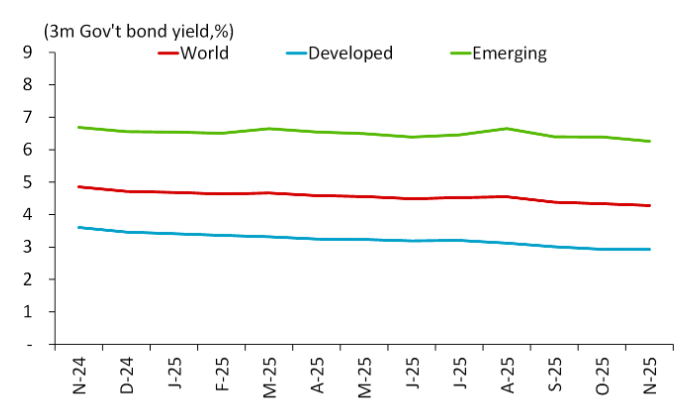
- Emerging markets: Still elevated, except India and Korea
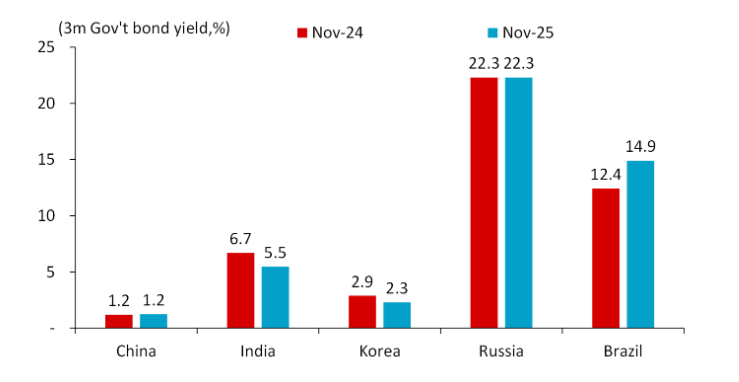
- Japan: The only developed market raising rates

And the US is leading the downward shift.
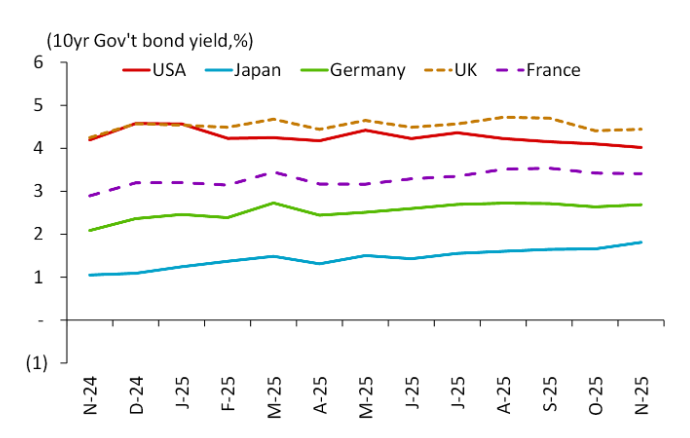
Since the 10-year yield is market-driven, not Fed-driven, investors are already pricing in lower future rates.
If your model assumes “steady state” but the market expects cuts, your credibility disappears instantly.
The Political Pressure Behind Future Rate Cuts
“Markets don’t move on math alone - they move on power.”
There’s what most analysts miss: interest rates are not only economic tools. They’re political weapons.
Powell’s term ends in 2026. Kevin Hassett — a frontrunner to replace him — openly supports large rate cuts.
And with midterms approaching, political incentives push hard for lower rates and stronger markets.
If rates fall aggressively, this happens fast:
- borrowing costs collapse
- profitability improves
- discount rates fall
- valuations expand
Ignore the political setup, and you’ll miss the biggest valuation move before it arrives.
How Rate Shifts Flow Into Your DCF Inputs
“If your inputs are wrong, your outputs don’t matter.”
Episode 1 breaks down the four valuation levers that interest rates touch directly:
- Discount Rate
- Weighted Average Cost of Capital (WACC)
- Growth Assumptions
- Valuation Multiples
Higher rates lift discount rates. Lower rates raise valuations. This is the heart of the DCF.
Cost of debt and cost of equity move with the macro environment — WACC rises or falls with them.
Low rates stimulate expansion. High rates choke capex. Your model must reflect the cycle.
Lower required returns expand multiples. Higher required returns compress them.
Ignore these dynamics, and you’re building projections, not valuations.
Your Quick Checklist for Valuations
Here are the key steps professional analysts follow to ensure their valuations are grounded in reality
- Anchor your risk-free rate to the current 10-year government bond yield
- Adjust the Cost of Debt and Cost of Equity based on the prevailing rate environment
- Check how sector multiples have moved with recent rate changes
- Add a sensitivity table showing how small rate shifts (e.g., $\pm 50$ basis points) impact the final valuation
Always remember that interest rates sit at the heart of every company valuation model, especially the DCF, and getting them wrong makes all other results unreliable.
Why Episode 1 Is Essential for Analysts and Investors
“If you’re serious about valuation, this is the episode that closes the knowledge gap.”
Episode 1 gives you exactly what valuation practitioners often lack:
- A clear view of where global interest rates stand
- How political and economic pressure could reshape rate paths
- How rate shifts directly flow into DCF mechanics and market pricing
This is the foundation for valuations that match the real market - not theoretical spreadsheets.
This is how you master valuation in months, not years.
People, References, and Resources Mentioned in This Episode
People
- Andrew Stotz - Host of the Valuation Master Class Show
- Donald Trump - Discussed in relation to potential influence on future rate cuts
- Jerome Powell - Current Fed Chair, term ends 2026
- Kevin Hassett - Frontrunner for next Fed Chair, advocate of large rate cuts
- Joe Biden - Mentioned for releasing the Strategic Petroleum Reserve to influence inflation
- Deborah & Lee - Viewer comments referenced during the show
Key Economic References
- US 10-Year Treasury Yield - Global benchmark for asset valuation, ~4 percent
- Fed December 9–10 Meeting - Expected 25 bps rate cut
- Ukraine War - Catalyst for rising global interest rates
- Silicon Valley Bank Crisis - Referenced as a trigger for rate movement
- Strategic Petroleum Reserve Release - Used to push down oil prices and inflation
Tools & Resources
- Andrew’s Global Interest Rate Chart Book - Available by email request (internal resource)
- All-Weather Strategy & Global Investment Strategy - Andrew’s investment positioning related to rate declines
Countries & Regions Referenced
- Developed: US, Japan, Germany, UK, France, New Zealand, Singapore, Hong Kong, Canada, Austria
- Emerging: China, India, Korea, Russia, Brazil, Thailand